There is nothing Benevolent about Benevolent Sexism
Most women recognize sexism when they experience it. It typically takes the form of harassment, incivility, or discrimination. It harms women’s careers at all stages, including recruitment, hiring, promotion, performance reviews and promotion. It also keeps women’s pay lower than men’s across professions, beginning with the starting offer, and it hurts retention.
Less obvious than overt or hostile sexism is benevolent sexism, which comes from paternalism and is couched in positive terms. For this reason, women experiencing benevolent sexism might not recognize it as sexism. Yet it is still undermining and limiting. In a study of sexism in the job search, Nitya Chawla and Allison S. Gabriel found that hostile sexism makes women angry while benevolent sexism makes them anxious.
Examples of benevolent sexism include the following beliefs and corresponding limitations: women are experts at domesticity (so they should only design homes); men should take care of women (so women don’t need to earn as much as men); women are nurturing (so employers evaluate warmth in performance reviews instead of competence).
Both hostile and benevolent sexism are rooted in gender stereotypes and a belief in masculine dominance. Hostile sexism is “antipathy toward nontraditional women” (like women who pursue careers) while benevolent sexism is “seemingly favorable yet demeaning beliefs about conforming women,” writes Peter Glick, who first wrote about benevolent sexism with Susan T. Fiske in 1996.
In spite of the term, benevolent sexism has a negative impact on the receivers. Regardless of any “positive feelings it may indicate for the perceiver, its underpinnings lie in traditional stereotyping and masculine dominance (e.g., the man as the provider and woman as his dependent), and its consequences are often damaging,” write Glick and Fiske.
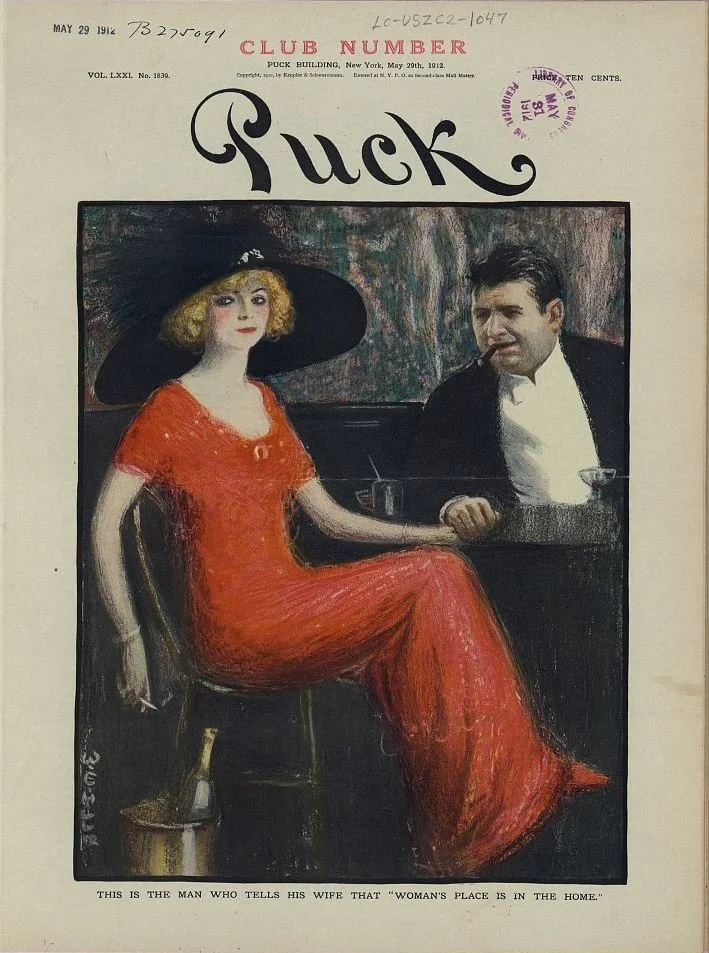
W. E. Hill, Artist, c. 1912. (Library of Congress)
“In predominantly masculine workplaces (including academic STEM fields) and positions of power, BS [(benevolent sexism)] …subtly reinforces women’s lower status by presuming their lower competence and ultimately limiting their advancement to higher ranks in two ways, Glick writes. “BS promotes workplace gender-based paternalism, which is mostly directed toward women who conform to gender roles…. BS self-handicaps women by reducing their work-related aspirations and performance.”
Hostile and benevolent sexism coexist. Both aim to control women. Employers need to recognize and stop all forms of sexism—even the kind that is couched as a compliment. This action will not only help women, it will also help the firm retain their talents. The anxiety triggered by benevolent sexism may result in a “flight” response, Chawla and Gabriel write. This can lead to women seeking a better work environment elsewhere.
Please subscribe to The Architectress.