Leola Hall: Artist, Designer, Speculative Builder
Leola Hall (1881 – 1930) was an artist, designer, and speculative builder in the San Francisco Bay area. Hall was born in San Leandro and lived in California except for a few years as a child when her father worked in Arizona as a miner. As an adult, Hall designed, built, and sold Craftsman-style homes, many in the Elmwood district of Berkeley. A partial list of her work includes nearly forty homes, most built between 1906 and 1909.
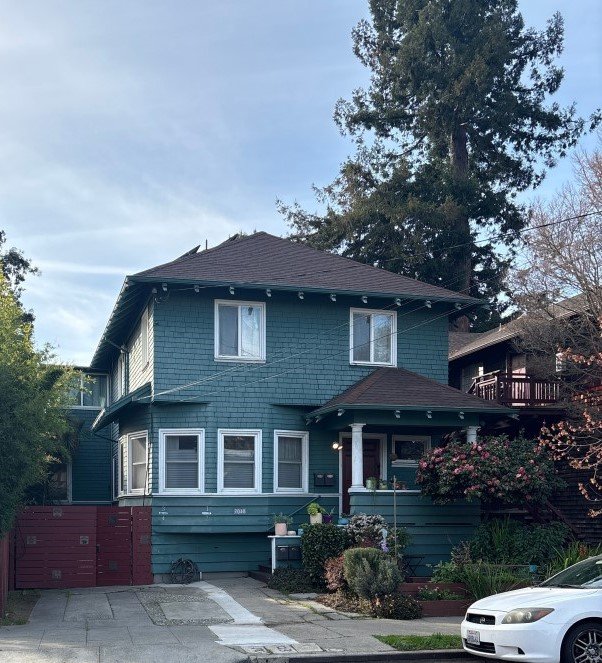
3048 College Avenue, 1906-07 (Jasmit Rangr, 2026)
The existence of a “woman builder” drew a house-hunting reporter’s attention in 1907, when Hall was about 26. While the reporter’s companion described Hall’s homes as “a combination of sense and sunshine,” the reporter became more interested in the novelty of Hall’s gender than in the design of her houses. Hall told the reporter her first success was in “designing heads for couch pillows”—apparently decorative generic portraits on pillows—and doing burned decorative work on wood while recuperating from an illness in Los Angeles. She obtained copyrights for her designs, some of which sold very well.
“I saved my earnings for my people were not moneyed,” Hall told the reporter. She returned to Berkeley and continued her recovery by accompanying a relative, who she described as a “practical builder,” as he superintended projects. Hall described having an immediate interest in the house plans, followed by an interest in the construction. After she felt she had completed her field-learning in home-building, Hall entered her brother-in-law’s office to learn about the office side of construction, including financing.
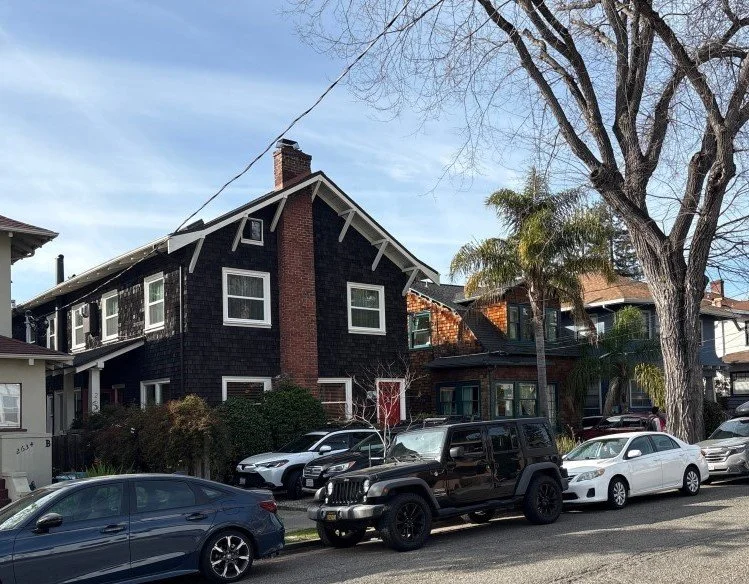
2628 College Avenue, 1908 (Jasmit Rangr, 2026)
In 1905, Hall took her savings from selling her pillow designs and woodwork and purchased her first plot of land. She constructed a house on it. Hall told the reporter her brother-in-law offered advice on this house, but future projects were done on her own.
Hall’s timing for starting a speculative home-building business proved fortuitous. The destruction from the 1906 San Francisco earthquake created a great demand for housing. Hall typically built two houses on each lot to meet the demand and lower her costs. She also handled the sale of her homes herself.
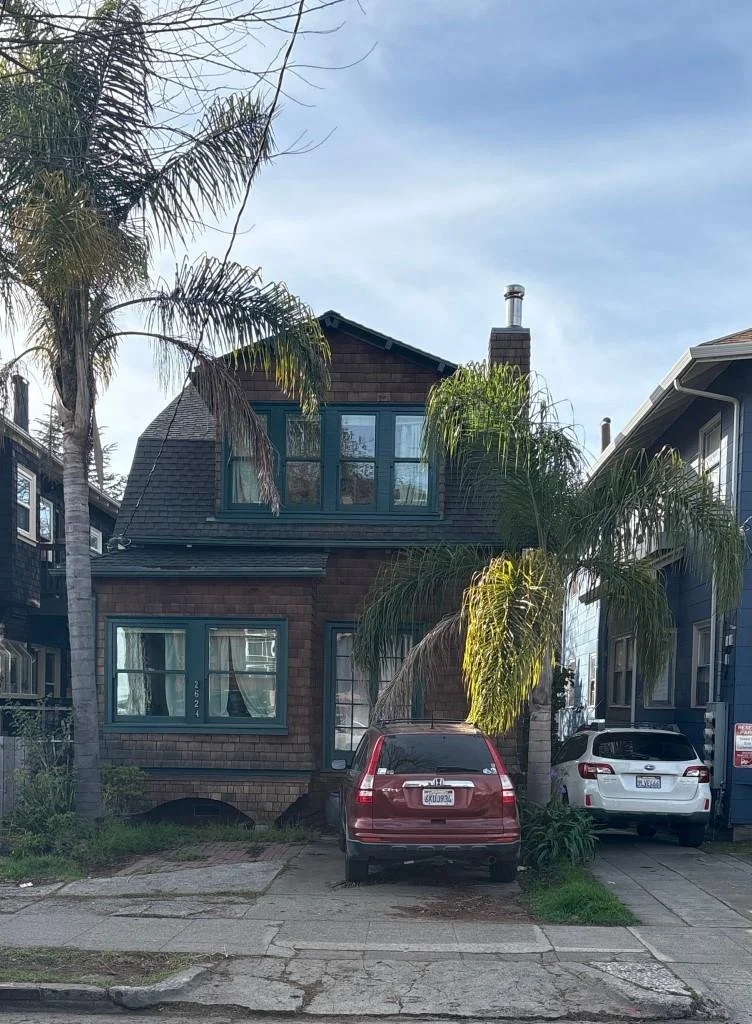
2627 College Avenue, c. 1908 (Jasmit Rangr, 2026)
For some homes, Hall bid out most of the construction and then managed the builders. “Contractors are like other people and sometimes I must wage war on their carelessness or slowness,” Hall said. Hall would also skip the general contractor and hire day laborers, employing and managing the workers herself. She described this method of construction as “more satisfactory.” When asked how workers responded to a female boss, Hall replied, “Oh, my workmen are as pleasant to deal with as men in other positions.”
Hall performed some interior work herself, including “tinting, decorating, and general finishing,” she told a reporter. Historian Betty Marvin writes that the designs for her home interiors frequently shared some features, including abundant daylight, built-in china cabinets with pass-throughs to the kitchen, clinker-brick fireplaces, built-in bookcases, window seats, and fretwork and inlaid corners in the hardwood floors. “Typically, the front door opens to the foot of the stairs….The openness of the stairway, and the continuity of the high board and batten wainscoting, include the hall space within the living room; wide sliding doors in turn incorporate the dining room with the rest of the living space,” Marvin writes.
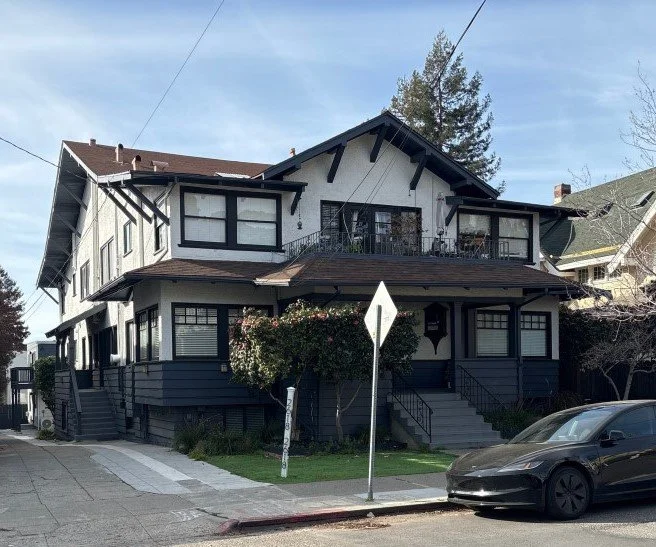
2618 College Avenue, c. 1908 (Jasmit Rangr, 2026)
In 1912, Hall “surprised her many friends” by marrying lecturer, writer, and ornithologist Herbert Coggins, The Bulletin reported. They returned from their honeymoon to take up residence in the house Hall had designed and built for them at 2929 Piedmont Avenue. While Hall included many trademark features such as a stepped chimney, cantilevered corner bay window, and built-in china cabinet with pass-through, other elements were a departure from Hall’s speculative designs. This included the stucco exterior and a “big, theatrical, two-story, barn-roofed living room,” as Marvin describes it.
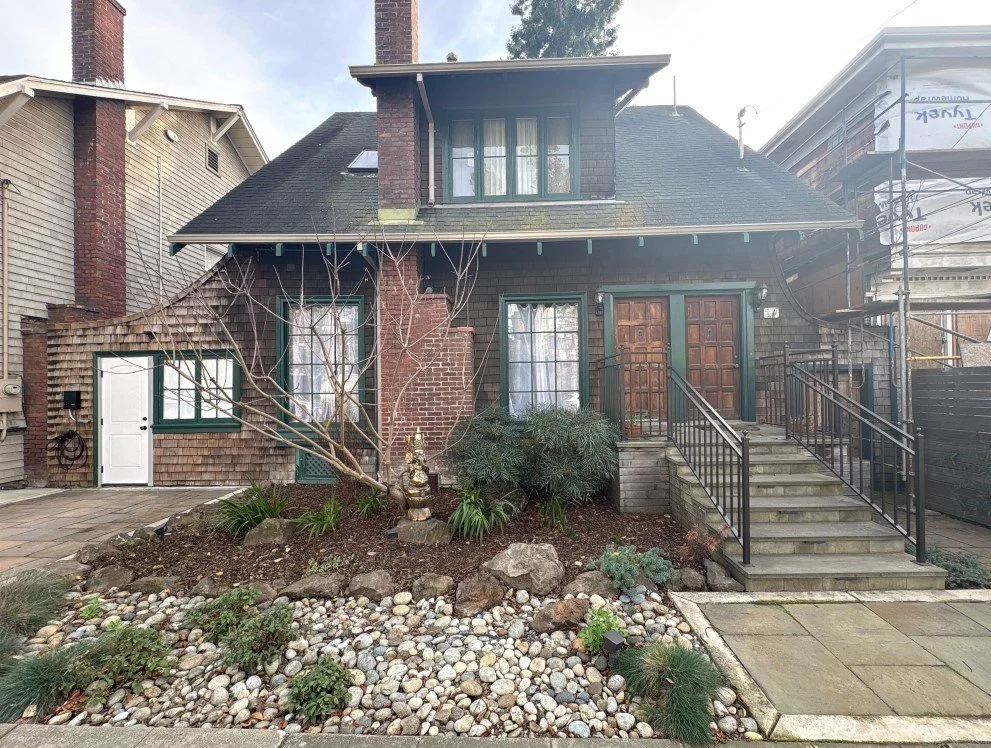
2730 Stuart Street (Jasmit Rangr, 2026)
Although Hall was an accomplished horsewomen as both rider and driver, she was an early adopter of the automobile. In 1911, Hall was driving Chicago suffrage leader Margaret Haley between meetings when they were stopped, diverted to the Oakland police station, and charged with violating the speed limit. Hall denied speeding and many women found it suspect that her arrest came just hours after the suffragists’ street-speaking license was revoked by Oakland’s mayor Frank Mott. Scores of women gathered at the police station the next day in protest. “’Just wait till we get the ballot!....We’ll show Mr. Mott,’” a newspaper reported them as saying. Hall and Haley were later represented by two female lawyers in court. The charges against them were dismissed on a technicality.
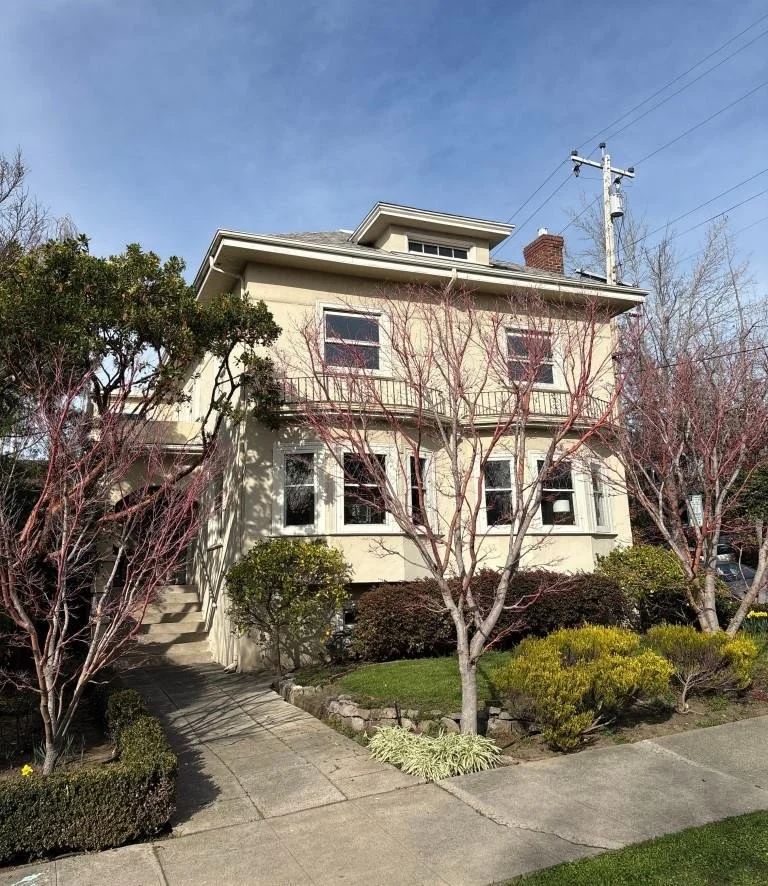
2747 Stuart Street, 1909 (Jasmit Rangr, 2026)
While Hall succeeded as a designer and builder, her interest in those professions was primarily financial. Her real passion was as an artist. Hall’s watercolors were exhibited by the California Art Association between 1904 and 1910, and she became known for painting portraits, some of prominent men. She confessed to a reporter interviewing her about her home-building business that, while it was good to be earning money, she wished she had devoted her life to music.
After her marriage, Hall turned her attention more toward artistic pursuits. She also remained active in politics, serving as vice president the Berkeley Women’s Roosevelt League. Hall built many fewer homes, with the last three being completed in 1915. A subsequent owner of the “Honeymoon House,” the home she designed for herself and her husband, described the living room as having excellent acoustics, perfect for Hall to play cello.
In 1930, at age 50, Hall died of a heart attack in her home.
Please subscribe to The Architectress.
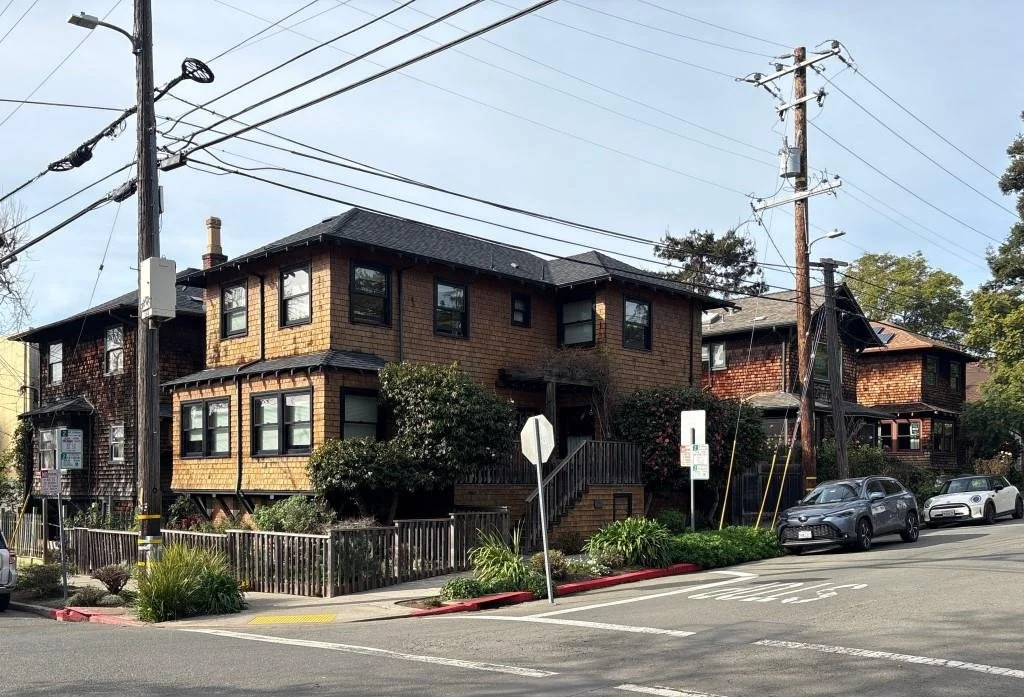
2758 Piedmont, 1909 (Jasmit Rangr, 2026)
Sources:
“The Success of a Woman Builder,” San Francisco Sunday Call, April 28, 1907: 12.
Betty Marvin, “The Residential Work in Berkeley of Five Women Architects” (Berkeley: Berkeley Architecture Heritage Association, 1984).
“Leola Hall Coggin, Bay Artist, is Dead,” San Francisco Examiner, September 24, 1930: 4.
Dave Weinstein, “On Spec: Leola Hall made her Mark with Craftsmen Homes in Berkeley,” August 2, 2003: E1, E6.
“Arrested for Pursuing Votes at Too Fast a Gait,” The Bulletin (San Francisco), August 4, 1911: 1.
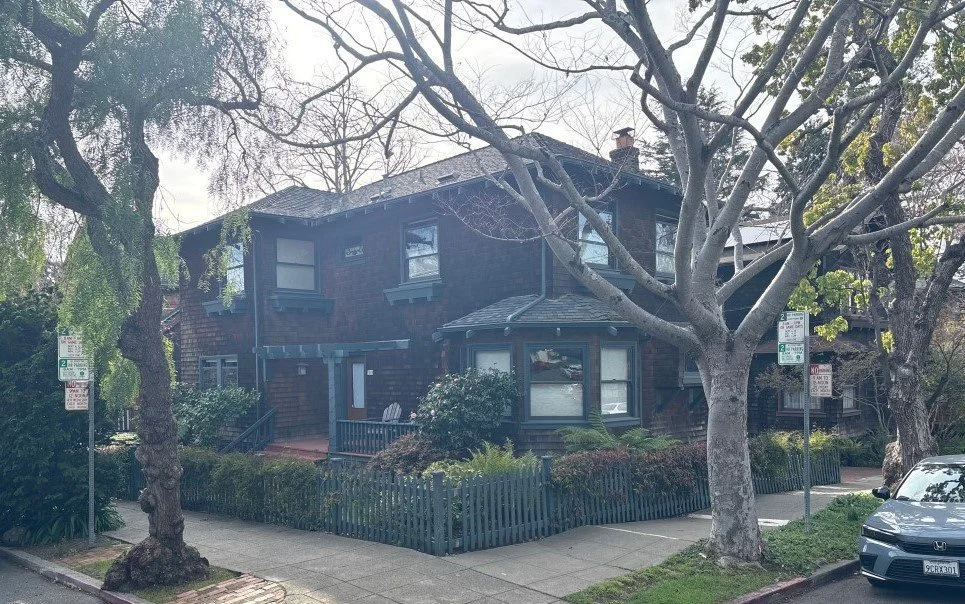
2800 Kelsey Street, 1909 (Jasmit Rangr, 2026)
“Court Frees Miss Hall of Charge,” Oakland Tribune, October 17, 1911: 11.
“Girl Architect Takes a Little Spin with Cupid,” The Bulletin (San Francisco), July 11, 1912: 10.
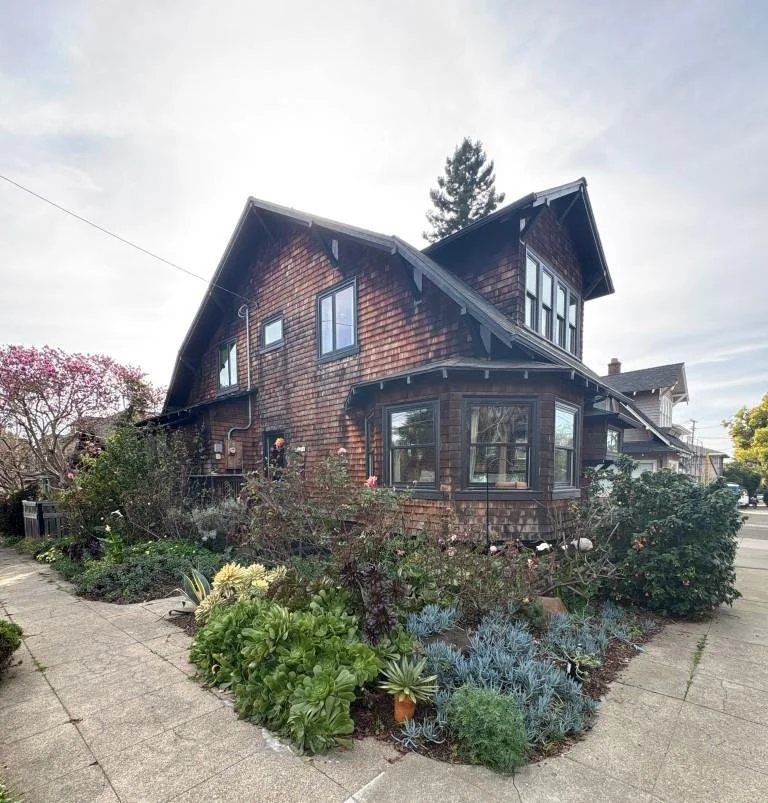
2800 Piedmont, 1909 (Jasmit Rangr, 2026)
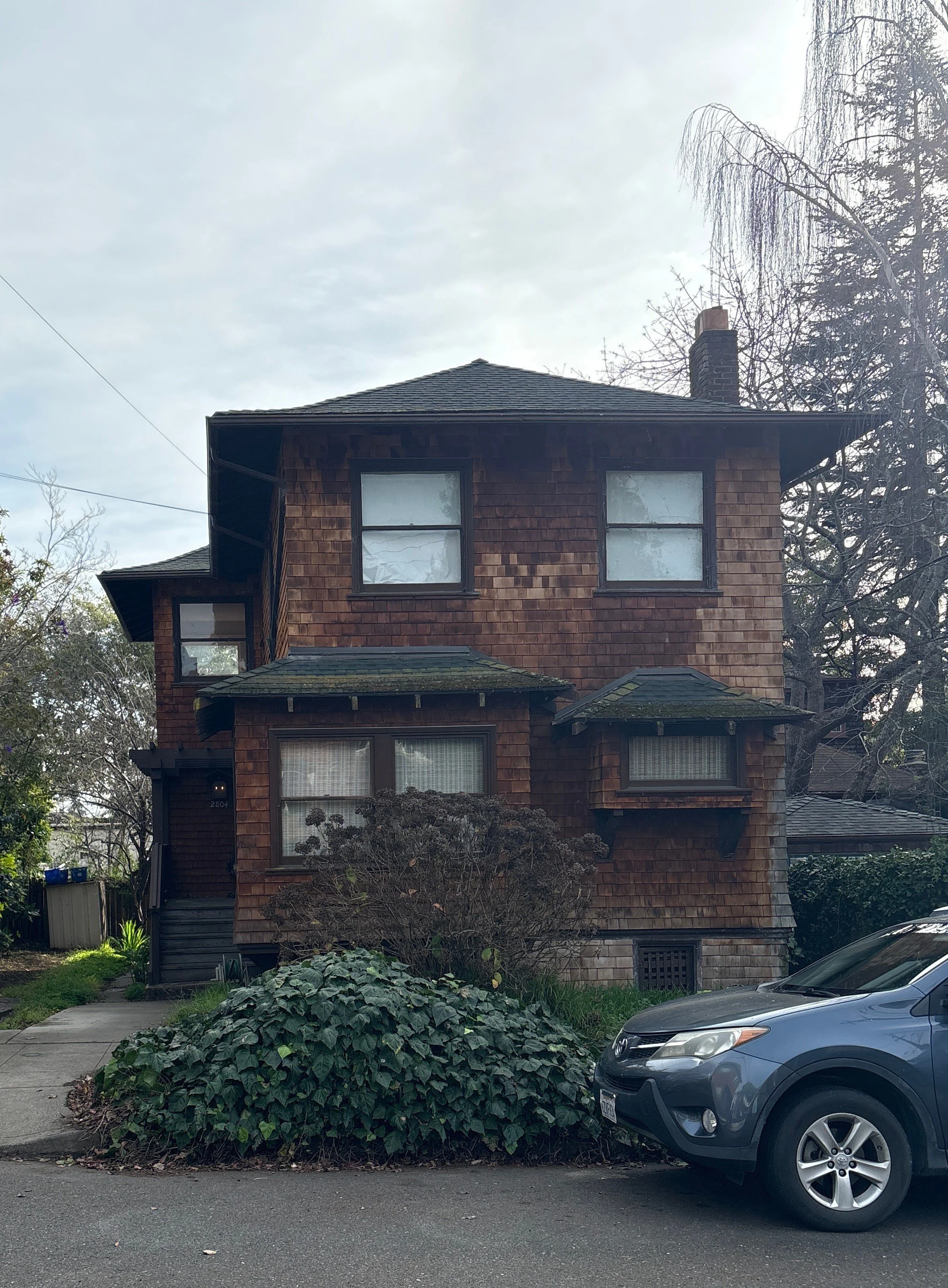
2804 Stuart Street, 1909 (Jasmit Rangr, 2026)
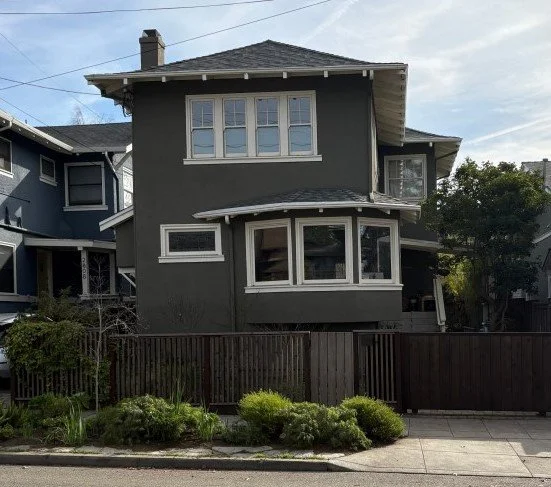
2806 Ashby, 1912 (Jasmit Rangr, 2026)
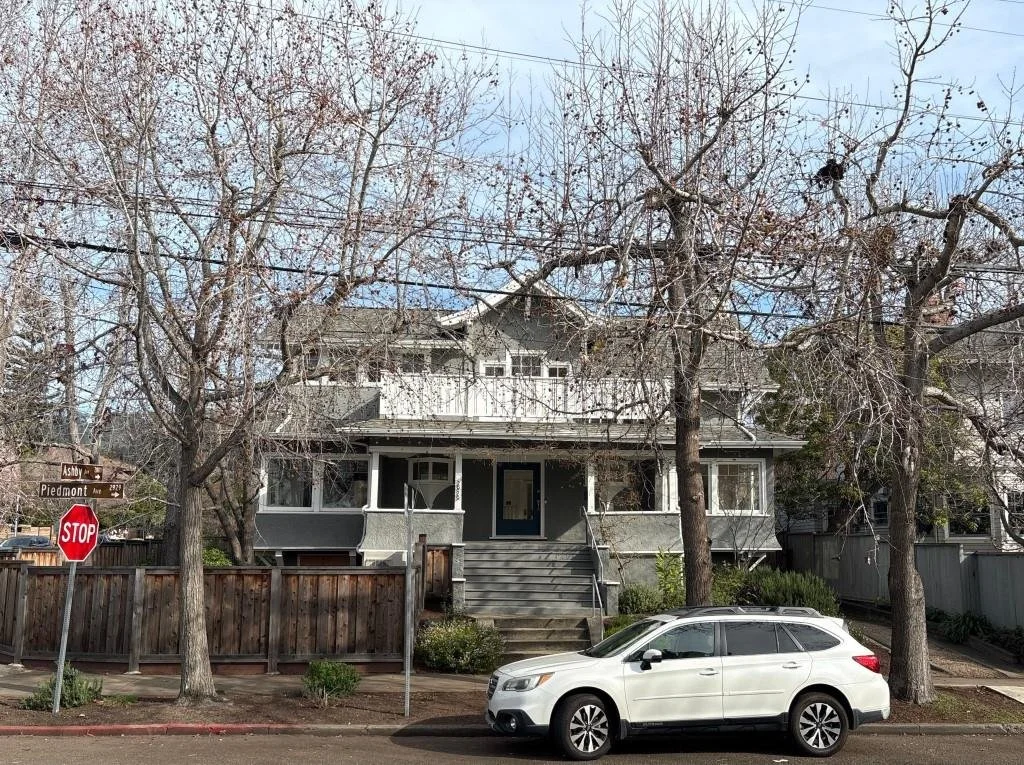
2929 Piedmont (Honeymoon House), 1912 (Jasmit Rangr, 2026)
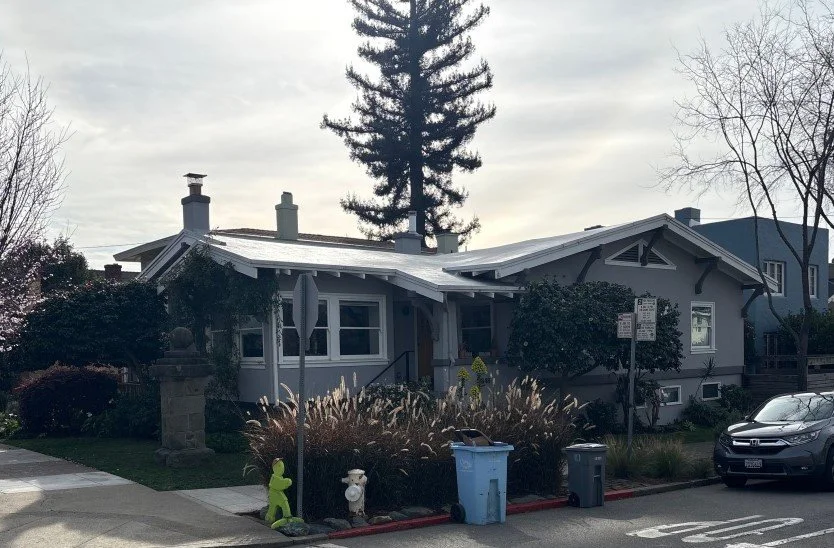
2848 Russell Street, 1915 (Jasmit Rangr, 2026)
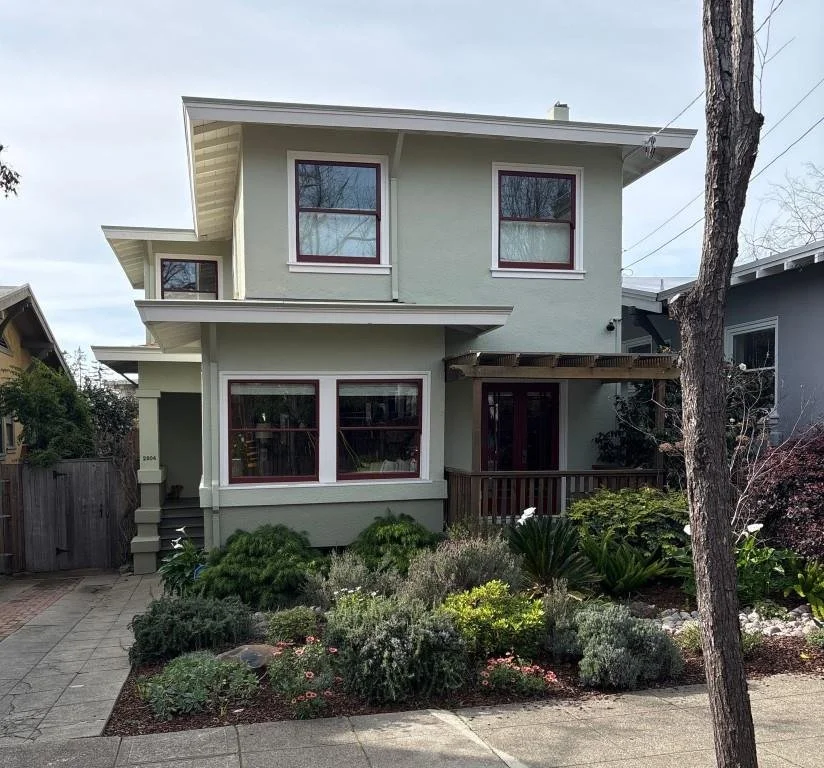
2904 Pine Avenue, 1915 (Jasmit Rangr, 2026)