Women Not Competing for Jobs: The Hurdle that isn’t There
Women are less likely than equally-qualified men to apply for positions when their qualifications do not meet all the criteria. This results in a smaller pool of female candidates, which in turn contributes to the lower rate of women in leadership positions across most professions.
It is not a lack of confidence that keeps female applicants from applying when their skills and experience do not match a job description perfectly, Tara Sophia Mohr writes in The Harvard Business Review. “What held them back from applying was not a mistaken perception about themselves, but a mistaken perception about the hiring process,” Mohr writes. “When those women know others are giving it a shot even when they don’t meet the job criteria, they feel free to do the same.”
“Telling people about stereotyped expectations can encourage defiance,” researchers Sophia L. Pink et al write in Organization Science. Their studies found that including a message informing potential applicants about the gender gap in competition eliminates this gender gap.
Why is such a message necessary? Women might feel that they need to meet more of the requirements to be considered equal because that has been their experience. For example, implicit bias is not uncommon in recruiting, and in the workplace women might find they must work harder and longer than men to earn the same respect and recognition. These experiences can lead women to believe it would be a waste of their time to apply for jobs when they lack one or more of the desired qualifications.
Another barrier for women can be that they are socialized from a young age to follow the rules. While this behavior is rewarded in school, it can hold women back professionally—including by not applying for jobs they might have a shot at without meeting all the criteria.
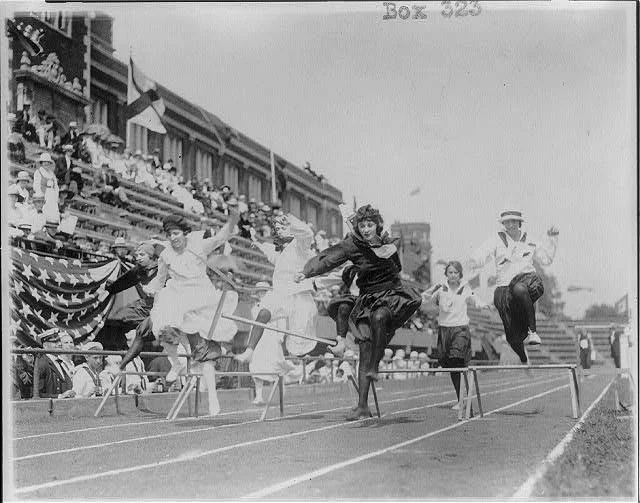
Women competing in low hurdle race, Washington, D.C., between 1920 and 1930. (Library of Congress)
Recruiters seeking to broaden their talent pool and potentially hire more women in leadership positions can share in the job posting that equally-qualified women are less likely to apply. Friends and allies of female job-seekers can also share the news—news that can inspire stereotype defiance.
“In a field experiment on a job application platform, we find that telling women about the gender gap in willingness to complete increases the number of leadership roles to which they apply by over 20 percent,” Pink et al write. In the long-term, such stereotype defiance can lead to a greater percentage of women in leadership roles and more equitable workplaces.
Please subscribe to The Architectress.