Helen Liu Fong Excelled at Googie Design
Interior designer Helen Liu Fong (1927 – 2005) played a key role in the design of numerous futuristic coffee shops, motels, gas stations, and more in Los Angeles in the 1950s and 1960s. The challenge was to get people out of their cars. With brightly colored finishes, large glass windows, dramatic rooflines, and a lot of neon, Fong’s buildings beckoned to passing drivers. This style of architecture had been dubbed “Googie” by critic Douglas Haskell. It proliferated in Southern California from the 1940s to the 1970s.
Fong was born in LA’s Chinatown to Chinese immigrant parents. Growing up, she and her siblings helped in the family’s laundry business, but her father wanted them to get an education so they could be independent. Fong was a good student. She was admitted to UCLA, then transferred to UC Berkeley. She graduated with a degree in City Planning in 1949 and returned to LA.
After an unsuccessful search for a design-related position, Fong took a job as a secretary for an architect. After two years, she got a position as a junior draftsperson with architecture firm Armet and Davis. Not long after she started, the firm got its first commission for a Googie building. Fong demonstrated an immediate talent for the style. Her responsibilities in the firm increased, with her eventually running the interior design and drafting departments and even making sure people got paid.
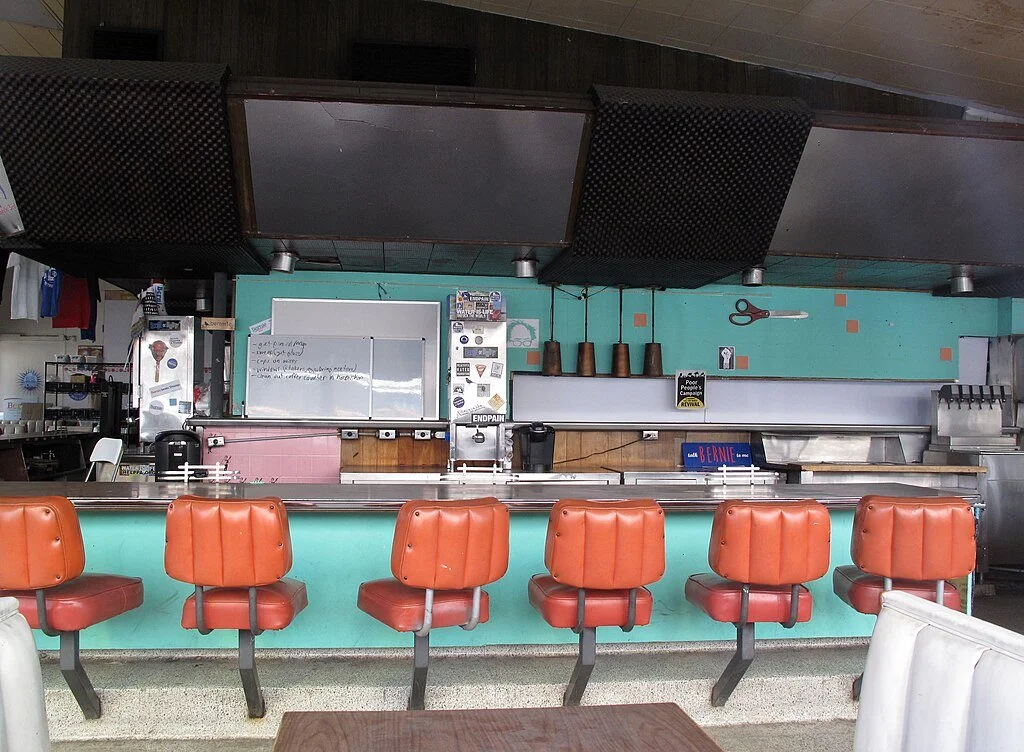
“Fong was known for her attention to color and detail, from the shape of the light fixtures and furniture (she favored Herman Miller chairs) to the cut of the employees’ uniforms and the glaze on the china,” her obituary in the LA Times read. She also hired artists to contribute murals, clocks, and other elements to the interiors. Colleagues recounted Fong painting red nail polish onto a wall of white mosaic tiles to add a pop of color just before a restaurant opened its doors for the first time.
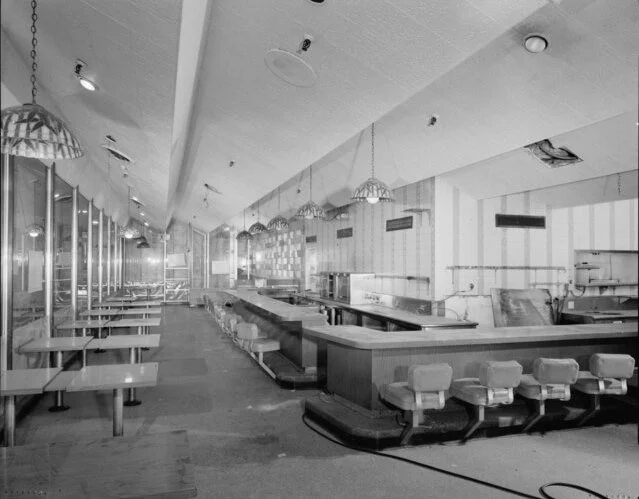

Coffee shop at Holiday Bowl, 2002. Tavo Olmos, HABS.
Fong was philosophical about the changes in public taste that led to the demolition of many Googie buildings, including her own. “It wasn’t our function to think in the long term. If we could make restaurants appealing, make you feel good when you’re in them, then we’d done our job.”
Fong retired from Armet and Davis in the late 1970s. She died of cancer in 2005 at age 78.
Sources:
Hadley Mears, “The designer who gave Googie its flair.” Curbed Los Angeles, May 30, 2019.
Elaine Woo, “Helen Liu Fong, 78; Architect Created Futuristic Designs for Coffee Shops.” Los Angeles Times, April 26, 2005.
Anna Kodé, “The Fight to Save Googie, the Style of Postwar Optimism.” New York Times, December 21, 2024.